.svg)
Just because a tree has been cut down doesn't mean it's finished growing.
It's one of the most common misconceptions homeowners and property owners face after a tree removal: the tree is gone, so the problem is solved. But beneath the surface — and sometimes right above it — that stump is very much still alive.
Tree stumps are surprisingly resilient. Even after the trunk has been removed, the root system continues to push energy upward. Stumps can actively grow for several years after a tree is cut down, slowly expanding the root system underground and sending up new sprouts in an attempt to regenerate. Left unmanaged, what started as a clean removal can turn into a recurring battle with unwanted regrowth — and a root system that keeps quietly spreading beneath your yard, driveway, or foundation.
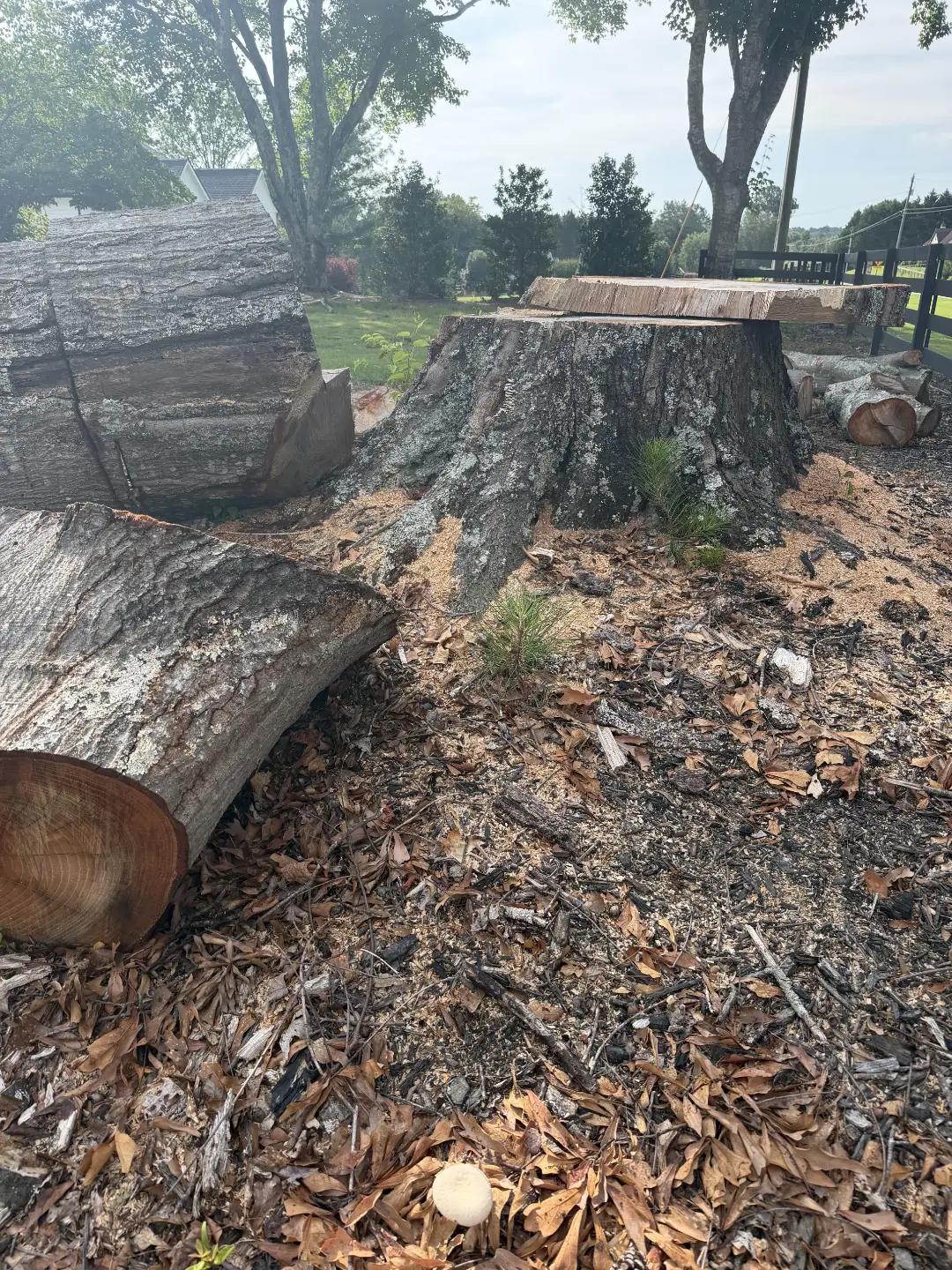
When a tree is cut down, the roots don't die immediately. Depending on the species, they can store years' worth of energy and nutrients. The stump uses that stored energy to do two things:
These sprouts may look harmless at first, but they're a sign that the root system is active and working. And as long as those roots are alive, the cycle continues.
One of the most accessible DIY approaches is using a stump killer herbicide or chemical stump remover. The key is application method: drill several holes several inches deep directly into the top of the stump, then pour the herbicide into the holes. This allows the chemical to absorb directly into the wood and reach the root system, rather than simply sitting on the surface. Follow manufacturer instructions carefully, as products vary in concentration and wait time.
If you see new green shoots emerging from the stump or nearby ground, cut them off right away. This isn't just tidying up — it's strategic. New sprouts are how the root system feeds itself. When leaves emerge, they capture sunlight and convert it into energy that flows back down to the roots. Eliminating sprouts consistently starves the roots of that solar energy, weakening the system over time. It takes persistence, but regular trimming can gradually exhaust the stump's reserves.
For a permanent fix, complete stump removal through professional excavation is the best course of action. This eliminates the stump, the surface root structure, and the source of regrowth entirely — no chemicals needed, no waiting, no ongoing maintenance. A professional land clearing or tree service crew has the equipment to grind or excavate the stump and prep the area for whatever comes next, whether that's new landscaping, construction, or simply clean usable land.
A stump left unmanaged isn't just an eyesore. It can interfere with mowing, attract insects and rot, disrupt nearby landscaping, and keep competing with new plantings for soil resources. The longer it's left, the more established the regrowth becomes.
If you're dealing with a stubborn stump on your property in Cumming, Forsyth County, or the surrounding North Georgia area, Gravitt Property Solutions can help. Our team handles everything from stump grinding and removal to full lot clearing and land preparation — done right the first time, so you don't have to keep fighting what's already been cut down.
Contact us today for a free estimate.

